RIPT. One codec. Six industries it transforms.
RIPT, our flagship raster codec, replaces a generation of legacy codecs across every domain that stores grids of numbers. Below: the problem each industry faces today, the measured advantage RIPT delivers, and the ROI math your CFO will recognize.
SVE2 · AVX-512 planned

Satellite & Earth Observation
Petabyte pipelines that actually keep up.
Constellations capture 30+ TB / day. Legacy LERC and JPEG 2000 throttle ingestion to a fraction of capture rate, forcing operators to either drop resolution, drop bands, or pay the egress bill twice.
RIPT is 9× faster than LERC on multispectral u16 with 20% smaller files, and 5.76× faster on lossy DSM. Encoders saturate the downlink. Decoders saturate the inference pipeline. End-to-end, the bottleneck moves out of the codec.
- Cloud Optimized GeoTIFF
- Sentinel & Landsat pipelines
- Planet & Maxar workflows
- GDAL / Rasterio
For a constellation moving 1 PB/month at $0.09/GB egress, a 20% size reduction recovers ~$2.2M/year in cloud cost alone, before counting compute saved on faster decode.
Every Tier, In Detail
Pick your industry.
See your number.
Satellite & Earth Observation
Petabyte pipelines that actually keep up.
Constellations capture 30+ TB / day. Legacy LERC and JPEG 2000 throttle ingestion to a fraction of capture rate, forcing operators to either drop resolution, drop bands, or pay the egress bill twice.
RIPT is 9× faster than LERC on multispectral u16 with 20% smaller files, and 5.76× faster on lossy DSM. Encoders saturate the downlink. Decoders saturate the inference pipeline. End-to-end, the bottleneck moves out of the codec.
For a constellation moving 1 PB/month at $0.09/GB egress, a 20% size reduction recovers ~$2.2M/year in cloud cost alone, before counting compute saved on faster decode.
Defense & ISR
Tactical edge, classified at rest.
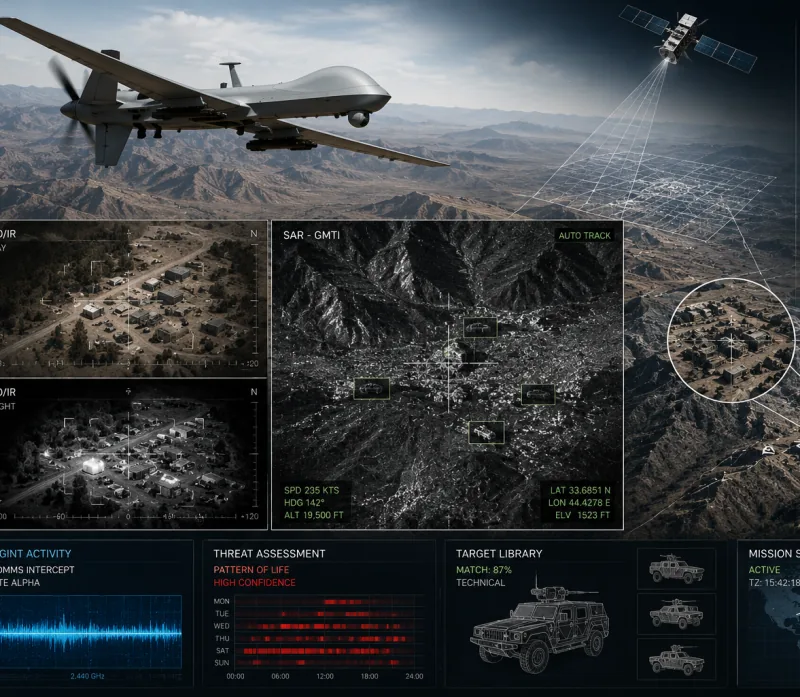
SAR speckle, rapid revisit, and tactical edge compute punish codecs designed for smooth optical scenes. LERC + Zstd hits 1.14× on ICEYE SAR, barely better than uncompressed. JPEG 2000 is too slow for real-time ISR.
RIPT detects when spatial prediction will lose, falls back to a Raw bypass path, and still wins. 1.88× ratio on the same SAR data, a 65% improvement. Cross-platform bit-exact output means the same encoded bytes decode identically on the operator workstation and the airborne edge node.
A wide-area ISR sortie generates ~5 TB raw. RIPT cuts that to under 3 TB on-platform, which fits one more pass in the same downlink window or one more sensor in the same airframe.
Medical Imaging & PACS
Diagnostic fidelity, archival economics.
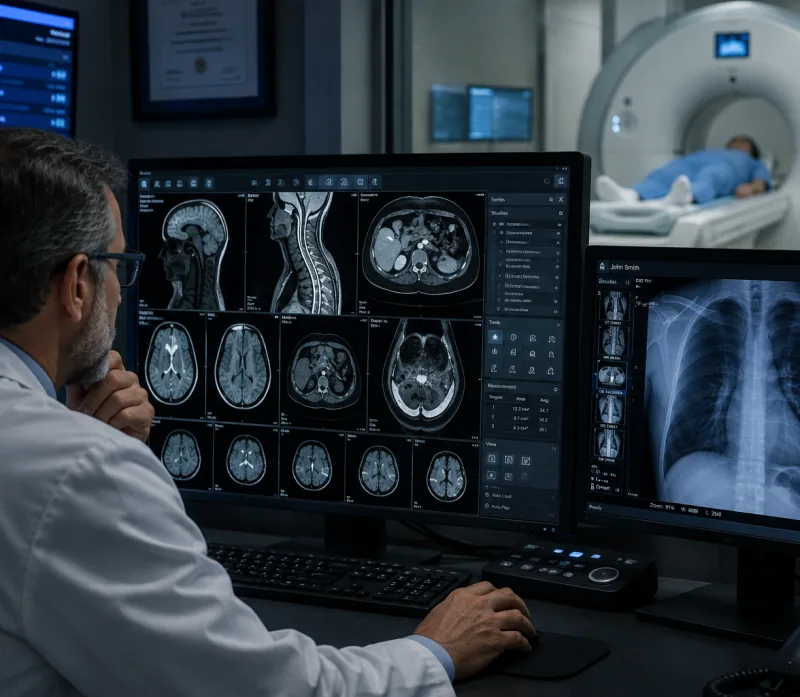
A modern PACS vendor stores petabytes of CT, MRI, mammography, and digital pathology. Lossless JPEG 2000 is the default: slow, single-threaded, and brittle on 12/16-bit greyscale. Storage is the line item every CIO points at.
RIPT supports every clinical bit-depth natively (8, 12, 16-bit) with bounded-error lossy modes that preserve diagnostic information. Tile geometry maps cleanly onto whole-slide imaging tiles. Decoder ships under permissive licensing, a viewer never owes royalties.
A regional PACS with 4 PB and 18% annual growth saves an estimated $1.4M / year on lossless studies and a multiple of that on cold-archive lossy tiers, without retraining radiologists or changing reading workflow.
Geospatial & GIS
A drop-in upgrade for every Esri shop.
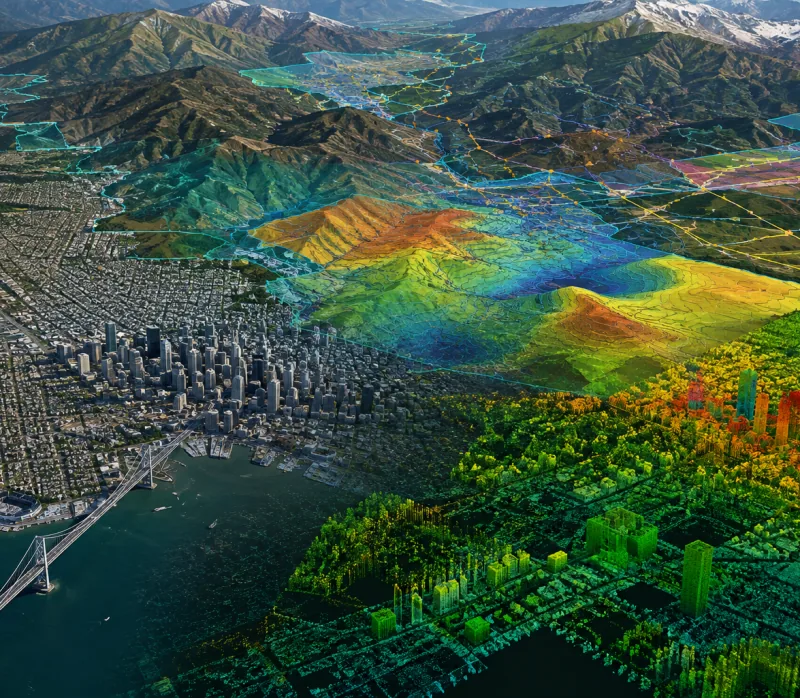
LERC is everywhere, and it is twenty years old. Every elevation server, every basemap pipeline, every GDAL-backed stack is paying the speed and size tax. Migration projects scare CTOs away from upgrades.
RIPT is a literal drop-in. The GDAL driver provides transparent read; the encoder is a one-line config flip. 100% win rate vs LERC on 120 quantized elevation files. 49% smaller on NAIP aerial. 39 domain-tuned profiles ship out of the box: DEM, DSM, ortho, classification, hillshade.
For a county or utility with 200 TB of imagery and elevation, RIPT typically reclaims 60–80% of the storage footprint while making every map tile request cheaper to serve.
AI / ML Infrastructure
Every numeric type, native.
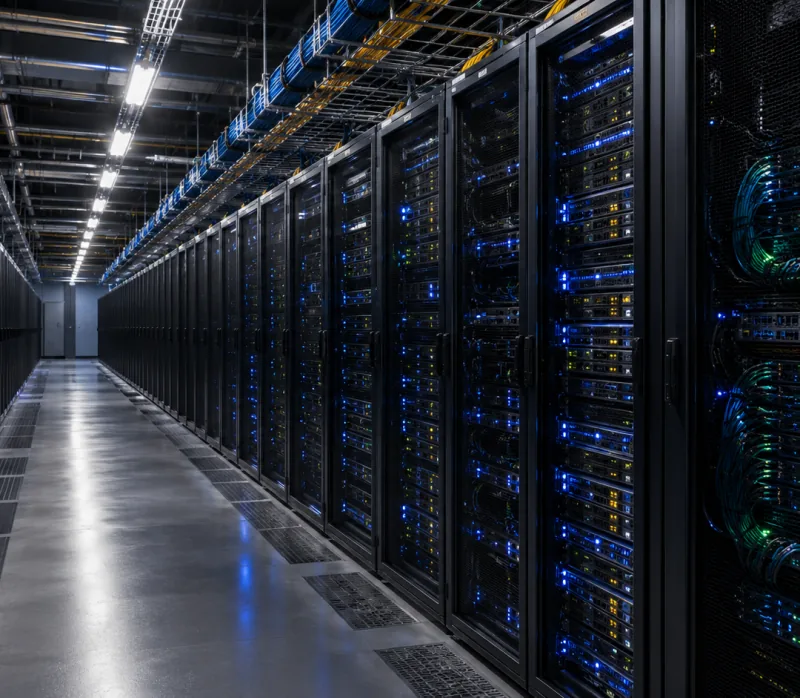
Modern ML pipelines move bf16, f16, int4, and int8 tensors at scale. No imaging codec speaks those types. Teams hand-roll bespoke serialization for training and quantized inference, then maintain it forever.
RIPT natively supports 14 numeric types, including int4, int8, bf16, f16. Quantized weights, geospatial foundation-model inputs, and feature pyramids compress in the same pipeline. Decode runs up to 2.3 GB/s per thread at the median, about 1.6× Esri LERC.
A geospatial foundation-model team training on 50 TB of multispectral chips cuts dataset storage by 20–50% and feeds the dataloader at line rate, eliminating the storage-IO bottleneck that idles GPUs.

Cloud & Scientific Computing
Zarr, Parquet, COG, finally fast enough.
Cloud-native scientific stacks (Zarr, Parquet, COG) need a chunk codec that decodes faster than the network can deliver bytes. Zstd is generic, has no spatial awareness, and tops out around 2× on raster. Blosc helps a little. Nothing scales.
RIPT achieves 1–8.6% better ratios than LERC even after stacking Zstd on top, and decodes 1–3× faster than LERC alone. The 18-byte self-describing header makes it cloud-native by construction: no sidecar metadata, no central registry.
A service handling 1M image-tile requests/day cuts decode CPU by ~75%. That is the difference between a 32-core fleet and an 8-core fleet, straight to the gross-margin line.
Why It Compounds
One codec wins six markets
because the moat is the same.
First-principles algorithms
Adaptive per-tile predictor selection, ARP hierarchical decorrelation, NearFlat sparse outlier coding, Quadratic surface prediction. Patent-pending. Zero documented prior art.
Modern silicon, by construction
Every primitive maps to vector instructions. L1-cache-aligned tile geometry. Zero-copy data paths. The codec that the SIMD-era codec textbooks would have produced if they existed.
Drop-in distribution
The drop-in codecs replace the pre-built backends in the tools the market already runs, GDAL among them. The free JavaScript SDK drives adoption; the codecs are licensed. Drop-in for LERC, COG, DICOM, the same MrSID/ECW playbook, executed for the cloud era.
Run the numbers
on your data.
Send us a representative sample of your imagery, rasters, or scientific arrays and we'll come back with a benchmark report measured against your current codec. No NDA required for public corpora.