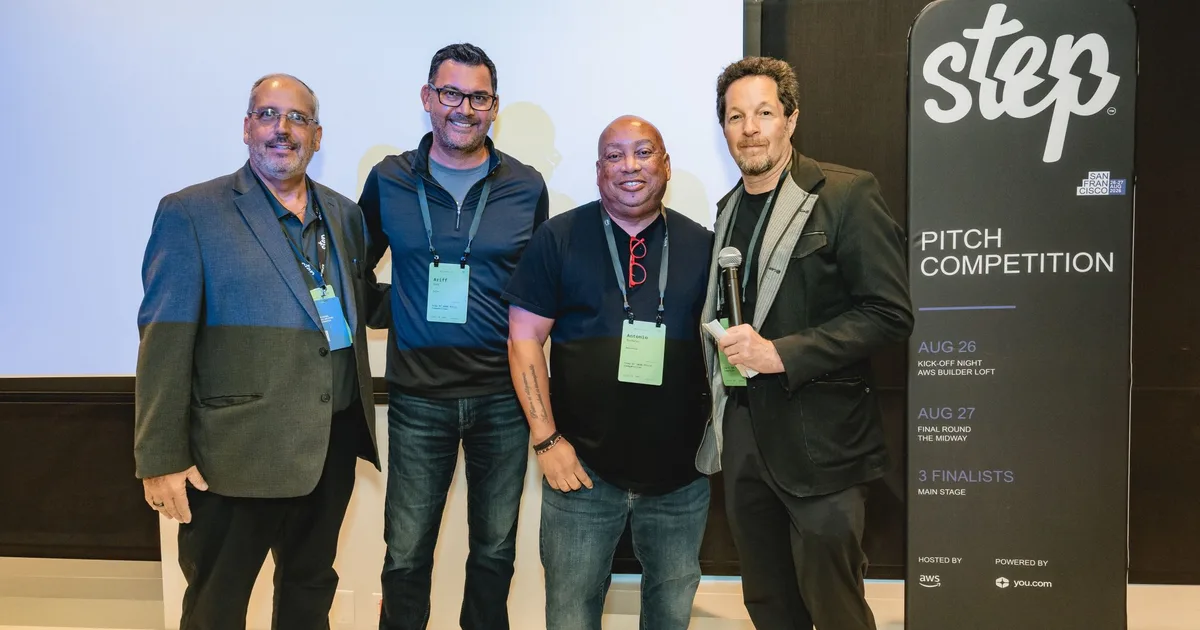
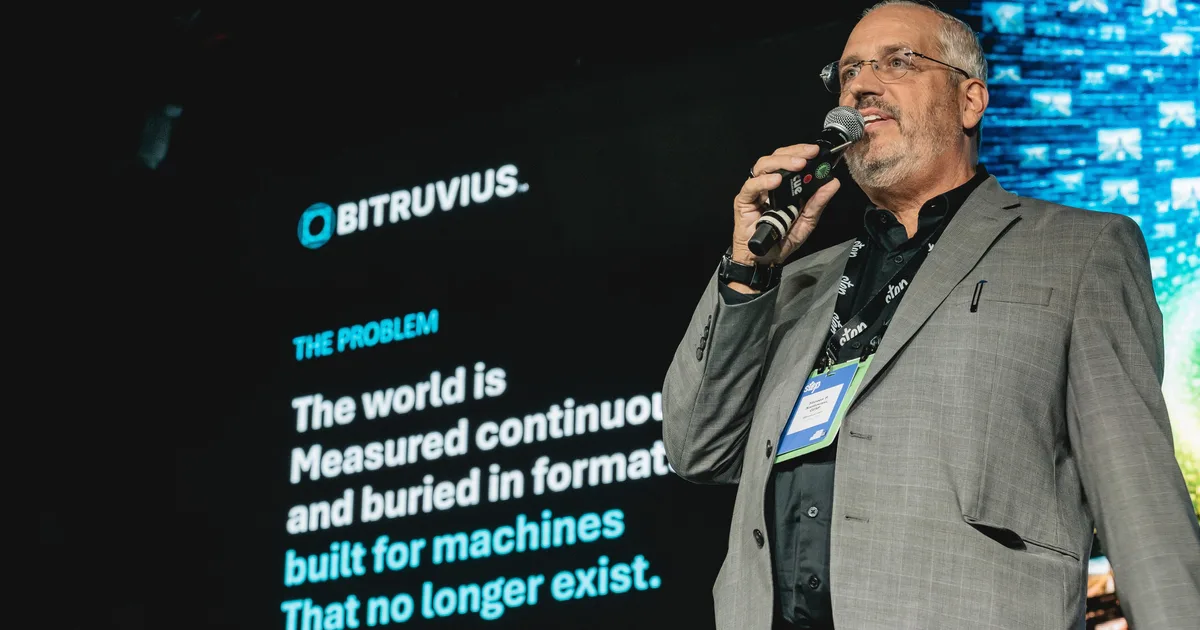
Wednesday night we were one of three teams left standing at the AWS Builder Loft. Thursday afternoon we walked onto the main stage at The Midway. Three minutes. Two minutes of live Q&A. A room full of founders, operators, and investors from around the world.
Steven Santovasi, Co-Founder, Co-CEO & CPO, put the company on that stage the way we have been building it: we are rebuilding the next generation of geospatial infrastructure from first principles. 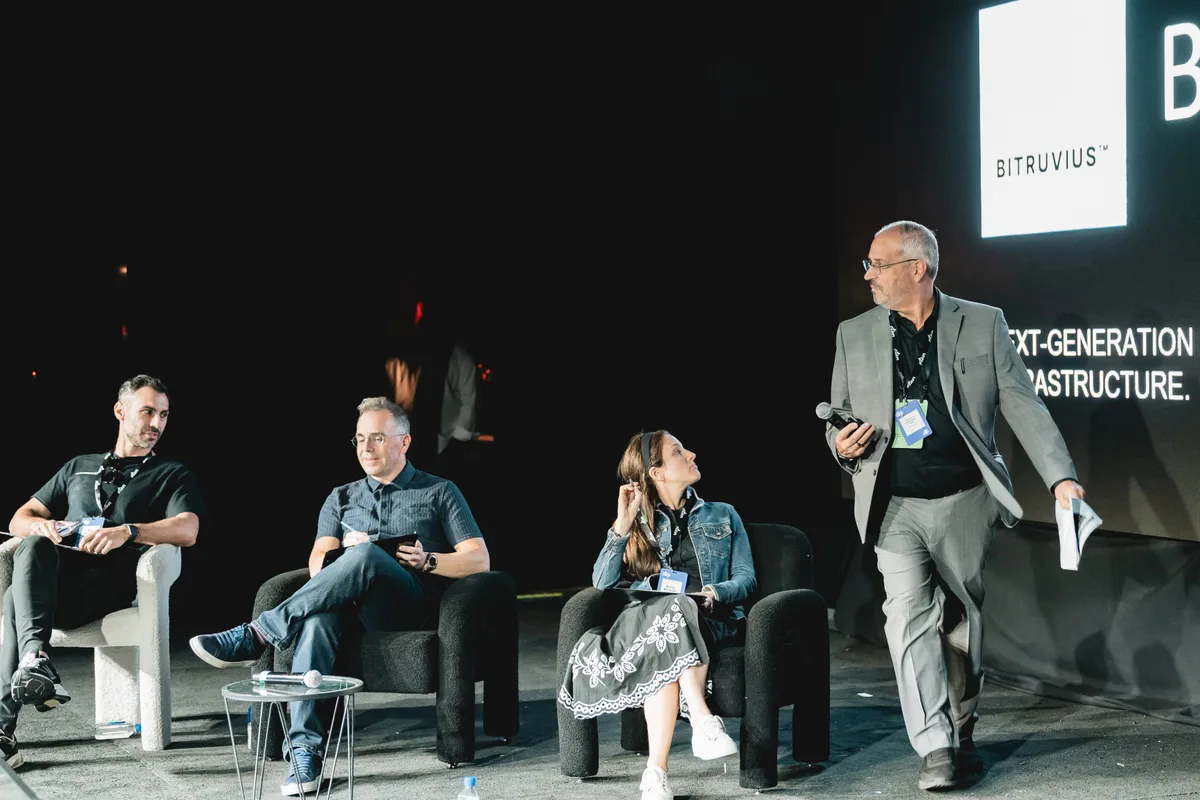
The problem, then the product
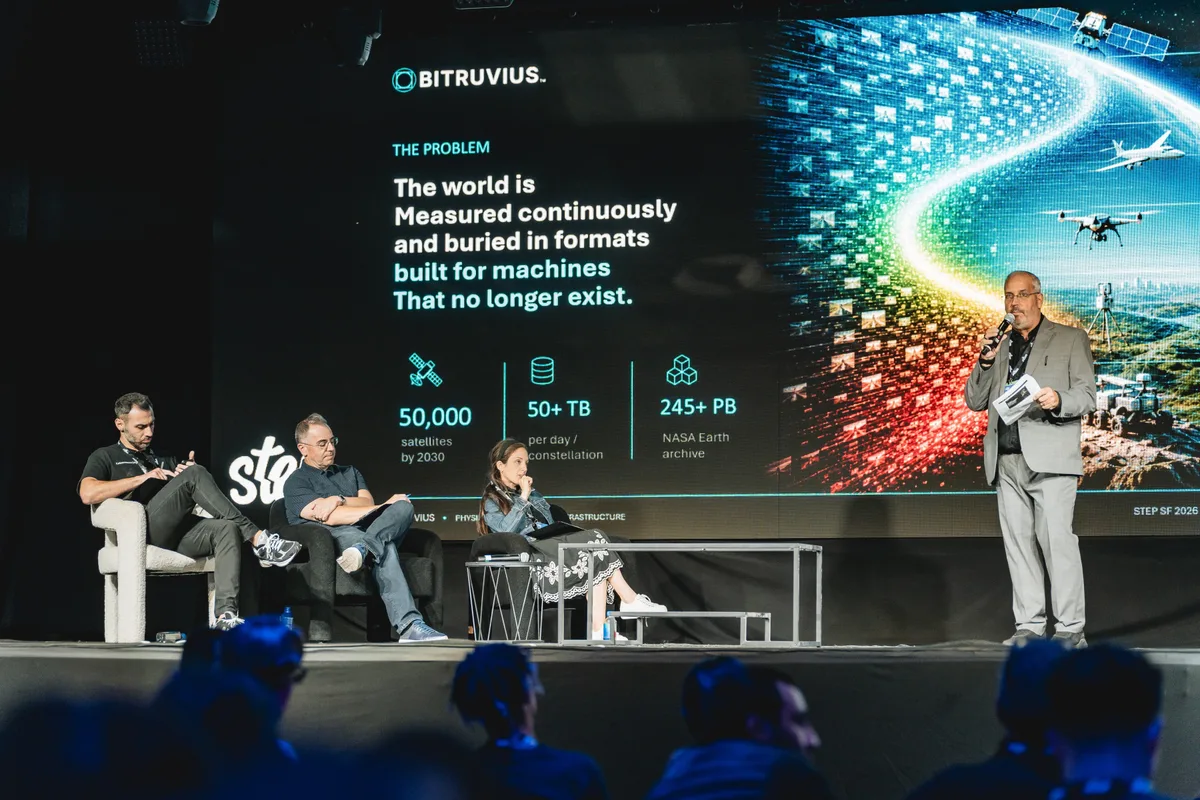
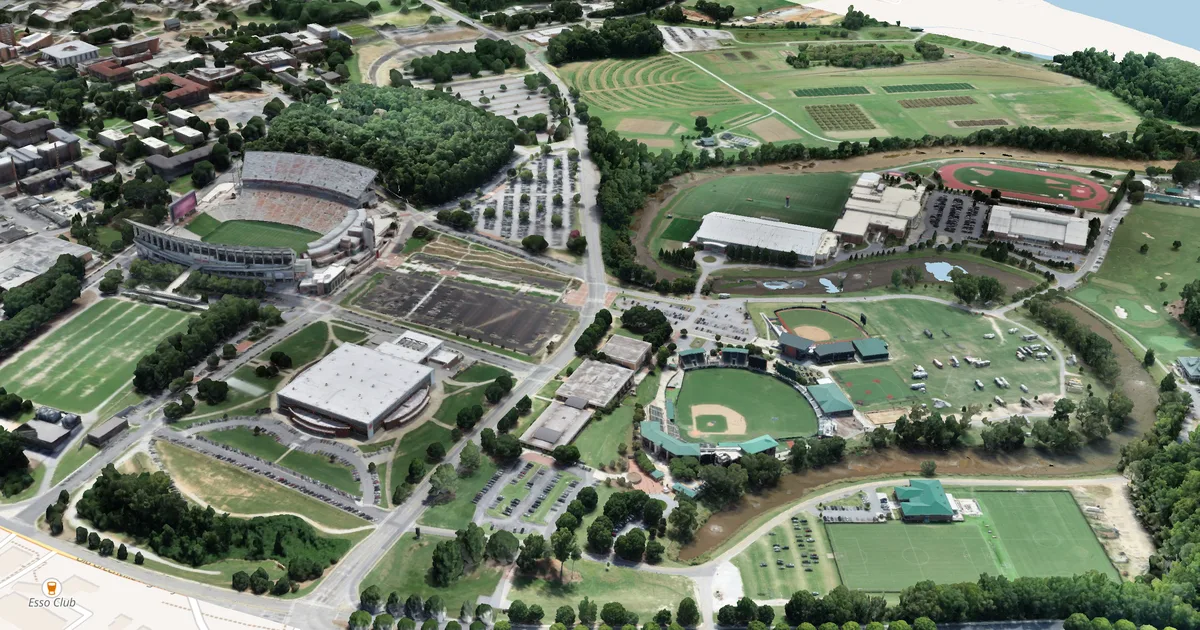
Anyone touching that data still pays for it three times: storage, bandwidth, and the compute it takes to get a pixel or a point into an AI pipeline. Most stacks are still forced to choose between fast and small. They need both.
Bitruvius exists to close that gap.
We rebuilt the substrate for modern silicon. Ten codecs. One suite. Native formats for raster and volumetric data, plus drop-in replacements for the libraries teams already ship. Adopting us is a library swap. The wire format stays. The stack does not have to move.
Decoders are live today through the Bitruvius SDK for JavaScript. The Bitruvius SDK for MapLibre is in public beta. Encoders are in limited private beta.
You do not migrate the world to start. You swap the layer underneath it.
We also gave the room a sneak peek at our early-stage Spatial Engine, running on those same codecs. Not a launch. A look at what happens when the engine and the codecs work together.
The proof is not a slide. It is on the site. Race the codecs on real data, in your browser, at bitruvius.com.
What that actually buys
The same storage holds more. The same read path gets out of first gear. Existing racks do more work before anyone pours another building.
Data-center electricity is on a path to roughly double this decade. Every byte that never gets written is a byte nobody powers, moves, or cools. That is not an offset and it is not a pledge. It is less infrastructure that has to be built and energized in the first place.
Spatial data is not the whole grid. On the slice we touch, the saving compounds as capture grows. The cheapest data center is still the one you never build.
Three minutes. Two minutes of live Q&A. That was the pitch. 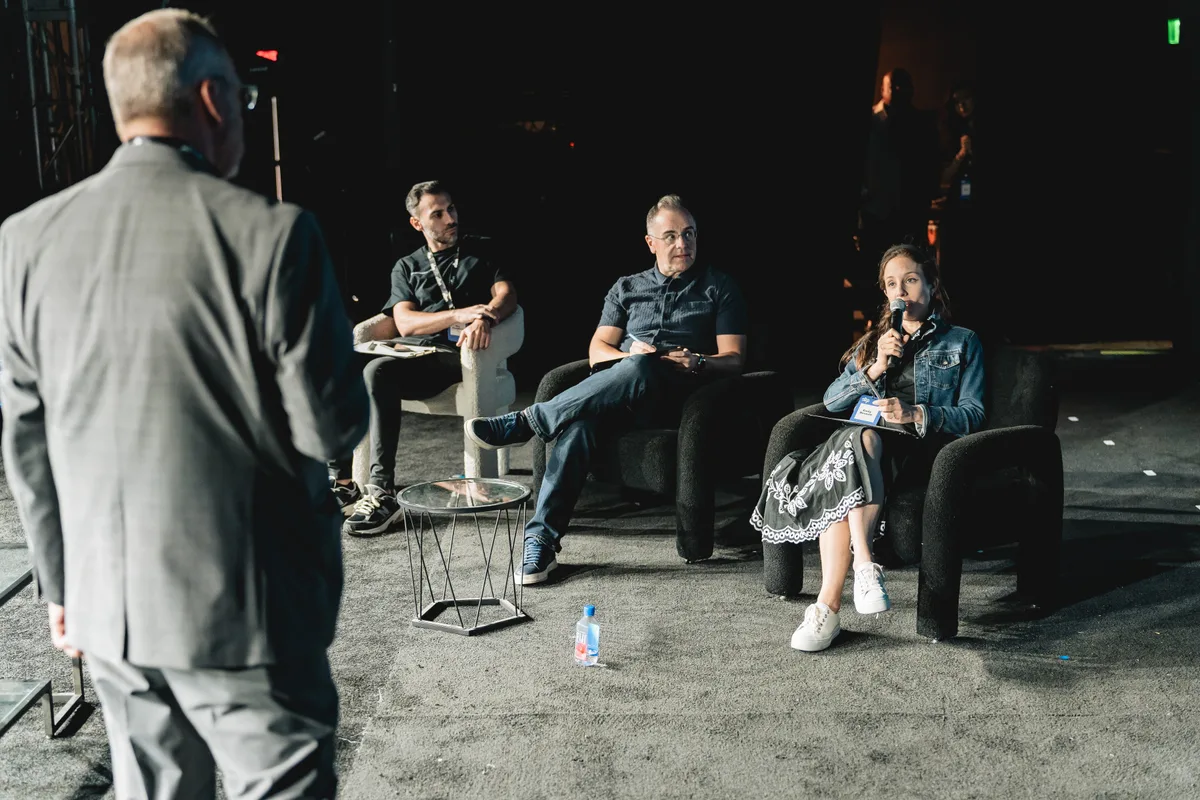
- Emily Bennett, Investment Partner, Andreessen Horowitz
- Ray Dargham, Co-Founder & CEO, Step
- Nuno Pedro, Founder & Managing Partner, Chamaeleon
They asked the questions that matter. We are grateful they gave geospatial infrastructure that kind of attention on the main stage.
Congratulations to Siftr (siftr.ai) on winning the competition. They earned it. And respect to HelixPlus (myhelixplus.com) for sharing that final-three stage with us. Three minutes is a short window. All three teams used it.
And thank you to the Step team for the invitation. Spatial data sits under more of that stack than most people notice. We wanted the conversation to start there. Step made room for it.
On the floor
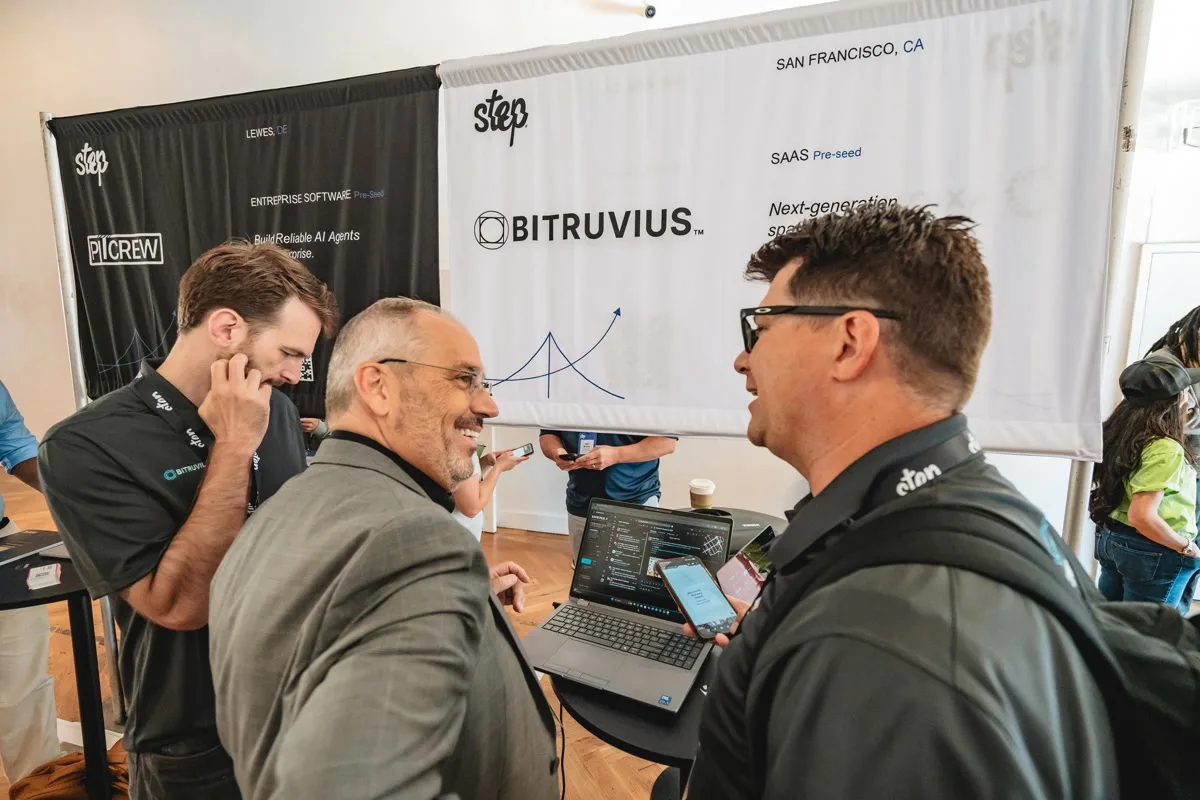
The pitch put Bitruvius on stage. The kiosk and the meetings put the product in front of people.
Thank you to everyone who stopped by, sat down, and took the time.
What happens next
If you work with imagery, point clouds, 3D data, we want to hear what you are shipping and what is slowing it down.
Talk to us: bitruvius.com/contact
The morning after the pitch, Andreessen Horowitz announced the Machine Age Fund: $1.1 billion for the physical buildout of AI. Chips, memory, networking, storage, systems software, and the machines that bring intelligence into the physical world. Models are outrunning the infrastructure underneath them. That is the stack we sit in. We are optimizing the codecs and geospatial layer for modern CPUs and GPUs, and building the formats this era actually needs. 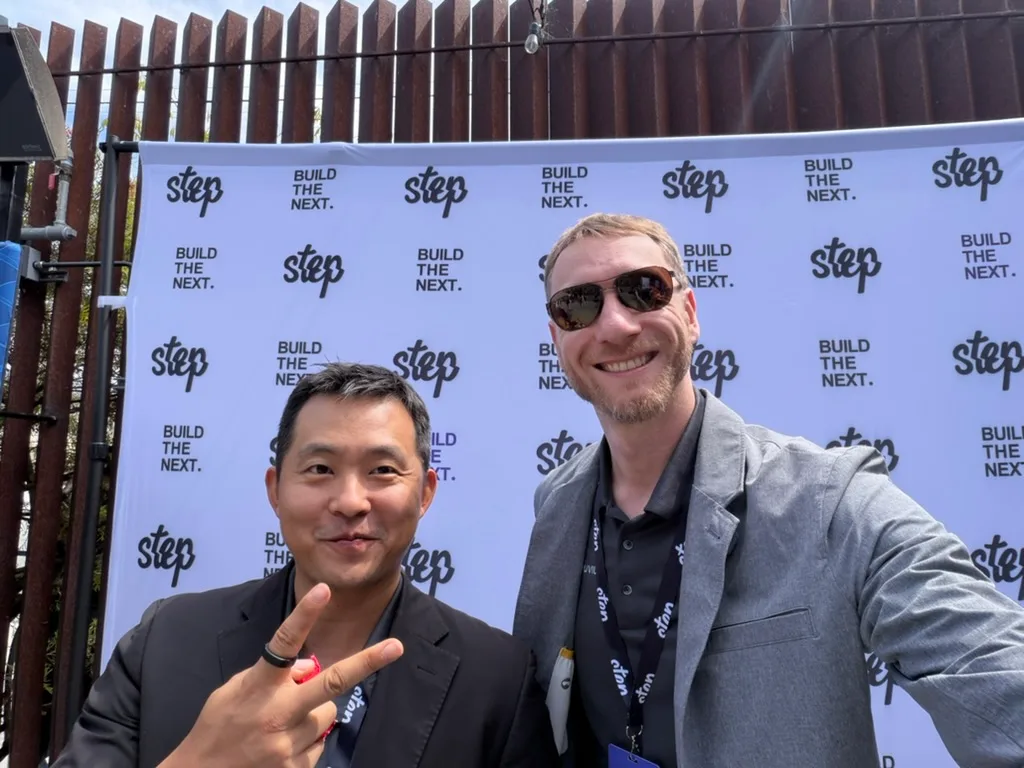
See you there.